
Learn. Build. Grow.
Dive deeper into Kuika with expert-led videos, detailed manuals, tutorials, and a vibrant community behind you.
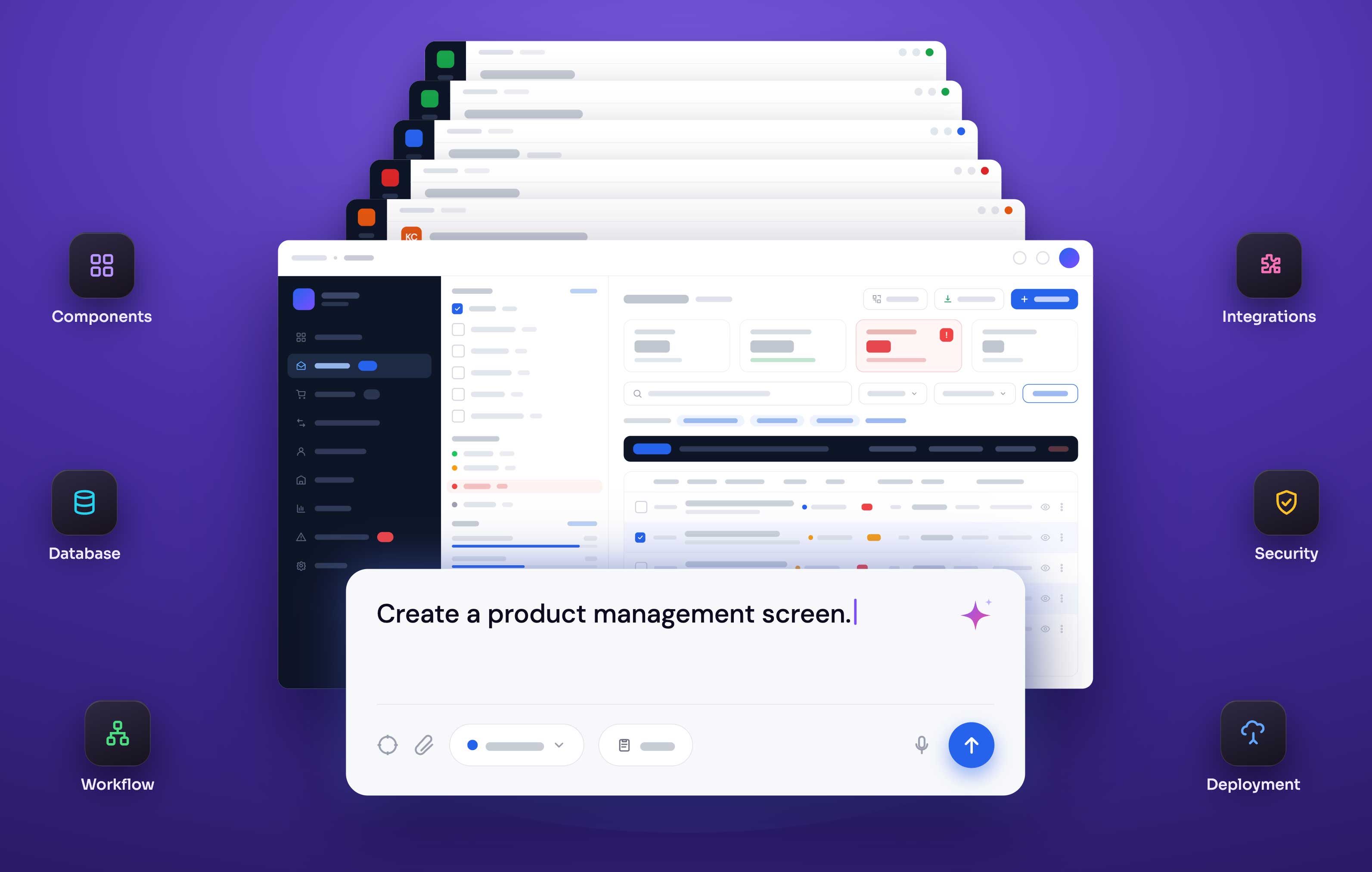
In early 2025, Andrej Karpathy famously described English as the hottest new programming language — you write software by simply saying what you want. It became one of the clearest snapshots of where software development is heading. Soon after came the term "vibe coding": you describe what you want to build, and AI writes the code. Claude Code, Cursor, Lovable, Bolt… each brings the idea to life in its own way.
For a solo developer, these tools are genuinely magical: a working prototype in hours, zero boilerplate, no repetitive grunt work. But at enterprise scale, things get more complicated. You have to comply with data protection laws like GDPR and KVKK. Your security team reviews every PR. You need to connect to SAP. And every single project rebuilds all of that infrastructure from scratch.
Enterprise Vibe Coding takes the speed of AI and bakes the security and oversight enterprises need right into the platform — so you never have to reinvent the infrastructure on every project.— Kuika Product Team
In short: combining the fluidity of vibe coding with enterprise-grade rigor. Citizen developers, seasoned engineers, and AI agents all work on the same platform, to the same standards, complementing one another.
These numbers look contradictory, don't they? On one hand, AI is set to write everything; on the other, 62% of that code comes out flawed. That's precisely why, in the enterprise world, the "fast or safe?" debate is giving way to a better question: "how do we get both?"
Enterprise Vibe Coding is the answer: baking the oversight mechanisms an enterprise truly needs directly into the process — without sacrificing speed.
Say you built an app in Cursor or Lovable. It works nicely, you shipped it fast. Then IT security steps in: "Where's the SSO? Is there an audit log? Is it running inside the VPC?" And you're back at the drawing board.
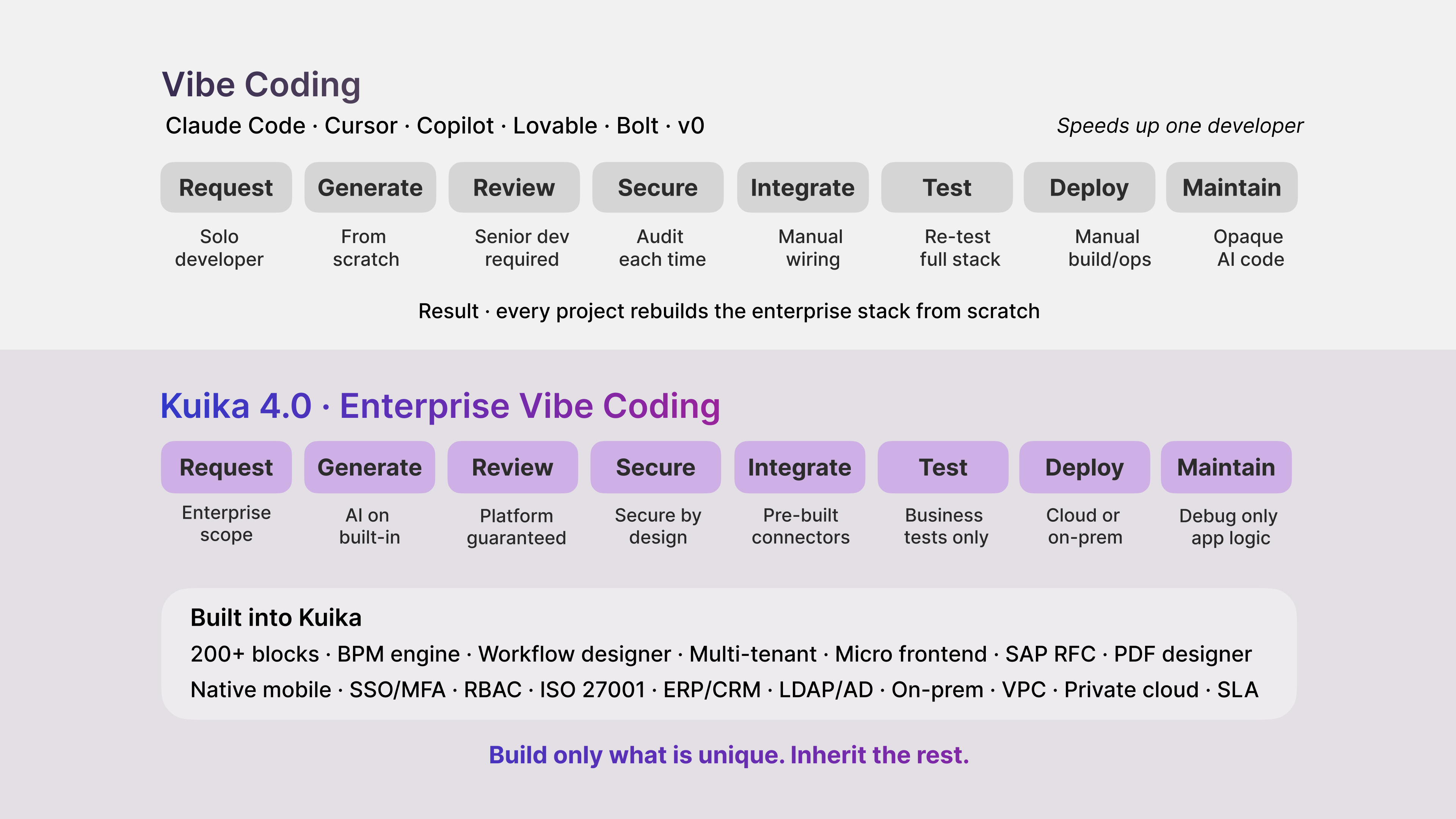
As the visual shows, in traditional tools every stage adds its own burden: security review is manual, integration is a separate job, and test infrastructure has to be built from scratch. And this cycle repeats on every new project.
While building Kuika 4.0, we asked ourselves one question: what does an enterprise truly need from an AI-assisted development process? The answer took shape across 20 criteria — and every one of them is built into the platform, so you don't have to set them up again on each new project.
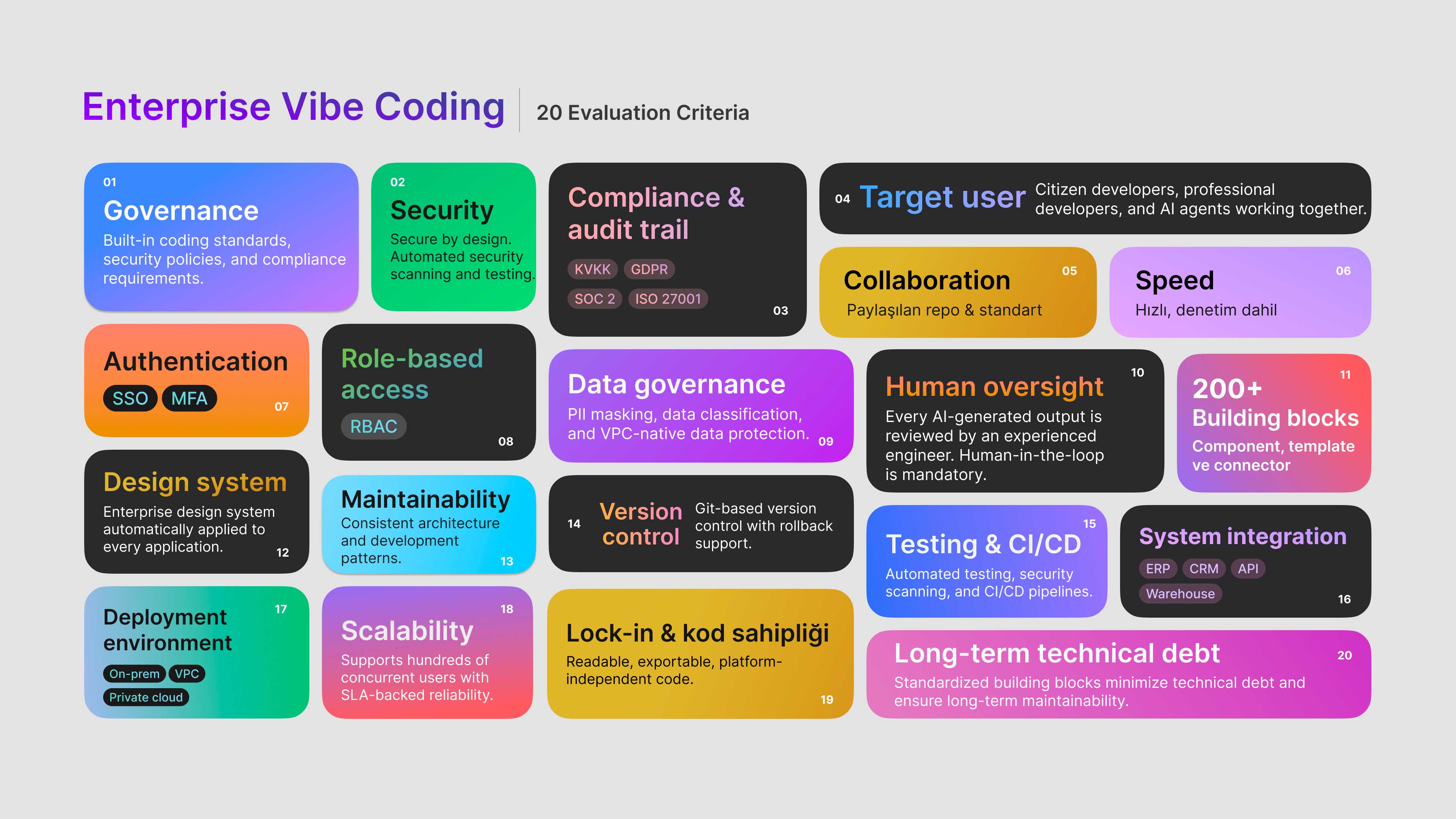
Enterprise app development has eight stages. With traditional tools, most of those stages trigger a "now what?" moment. With Kuika, the answers are already in place.
No need to spend time installing, licensing, or learning these separately. They're all included in the platform.
"Aren't we already using Cursor?" is a question we hear a lot. Different tools do different jobs — and seeing clearly where each one fits makes it easier to choose the right one.
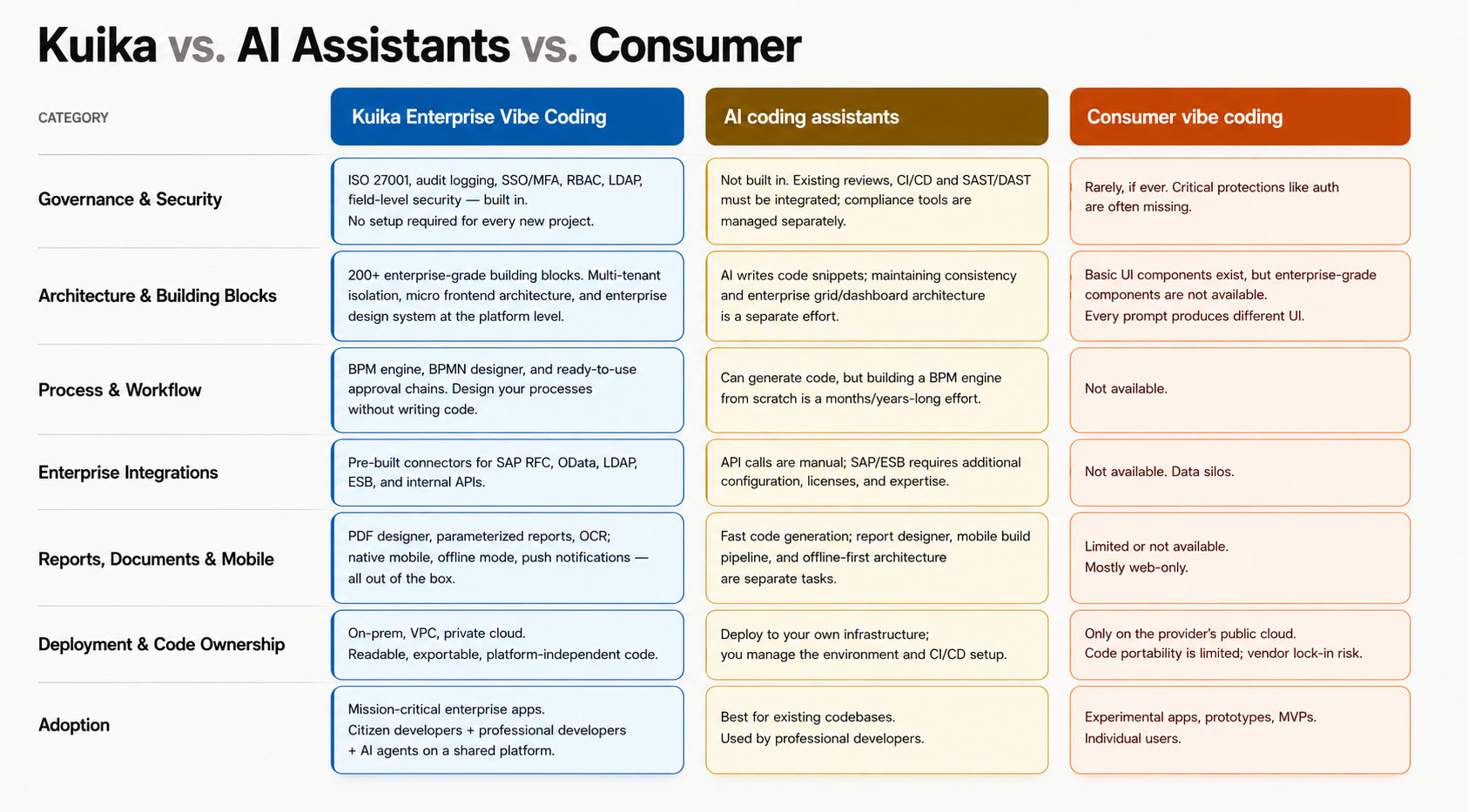
Look at what the teams who successfully bring AI-assisted development into the enterprise have in common, and six principles stand out. These aren't abstract ideals — they're concrete steps that show you what to actually do.
Define your coding standards, security requirements, and design rules up front. Then rely on tools — not people's memory — to enforce them automatically. Kuika embeds these policies into the platform, so every app it generates comes out aligned with your company's guidelines. Standing up an AI Center of Excellence (CoE) or a cross-functional committee also helps put this practice on solid organizational footing.
However good the AI is, every line of code headed to production should pass under an engineer's eye. This isn't just a best practice — it's essential for auditability and accountability. Kuika builds this principle into its architecture: AI output doesn't move forward until it's approved. AI stays an assistant, never the decision-maker.
Treat AI-generated code as insecure by default — until you've tested and approved it. Integrate security scans into your CI/CD pipeline, and apply encryption and authentication standards automatically to every output. Kuika does this at the platform level, without waiting for you to configure it.
Engineers, business units, IT teams, and AI agents all need to work in sync. Shared repositories, standard templates, centralized logs. Kuika's shared platform supports this collaboration structurally: who did what, when it was approved, why it went to production — all of it is traceable.
AI can draft tests and write documentation — but you're still the one who makes them meaningful. Code that's maintainable, clear, and well-documented is an investment your future team will thank you for. With Kuika's automated testing infrastructure, you focus only on business logic.
Don't try to roll it out across the whole organization in week one. Start with one team, on one project. Understand what worked and where it stumbled. Then mature your rule set and expand. This approach also reduces shadow IT risk: when tool choices are backed by central governance, everyone moves on the same secure ground.
Software development is changing — that's no longer up for debate. The real question is this: is your organization ready for the shift, or will it keep wrestling with the same infrastructure problems on every project?
Enterprise Vibe Coding is how you reconcile the speed of AI with enterprise realities. And Kuika 4.0 paves that road with ready-made infrastructure. Governance, security, compliance, BPM, native mobile, SAP integration, on-prem deployment — it's all already there.
Write the business logic that's unique to your organization. Leave the rest to Kuika.
Want to see how Enterprise Vibe Coding works inside your organization? Let's talk.
Dive deeper into Kuika with expert-led videos, detailed manuals, tutorials, and a vibrant community behind you.