
Learn. Build. Grow.
Dive deeper into Kuika with expert-led videos, detailed manuals, tutorials, and a vibrant community behind you.

Digitalization has caused a substantial shift in the business world by integrating digital technologies into workflows. Thanks to the use of digital and software tools, businesses can now effectively handle tasks that previously took days or hours in a matter of seconds.
Digital transformation (DX) is of paramount importance for businesses not wanting to fall behind in the ever-evolving business world. Let’s explore what digital transformation is and how low-code development contributes to enterprises’ digital transformation strategies.
Digital transformation can be defined as the integration of digital technologies into various business operations. It requires agility and the ability to adapt quickly to new developments. The integration of artificial intelligence (AI) tools into media and content marketing operations can be given as an example of digital transformation. Although ChatGPT has been a revolutionary step and is currently being used by many teams, this should not stop companies from exploring the newer, better AI tools and developments available.
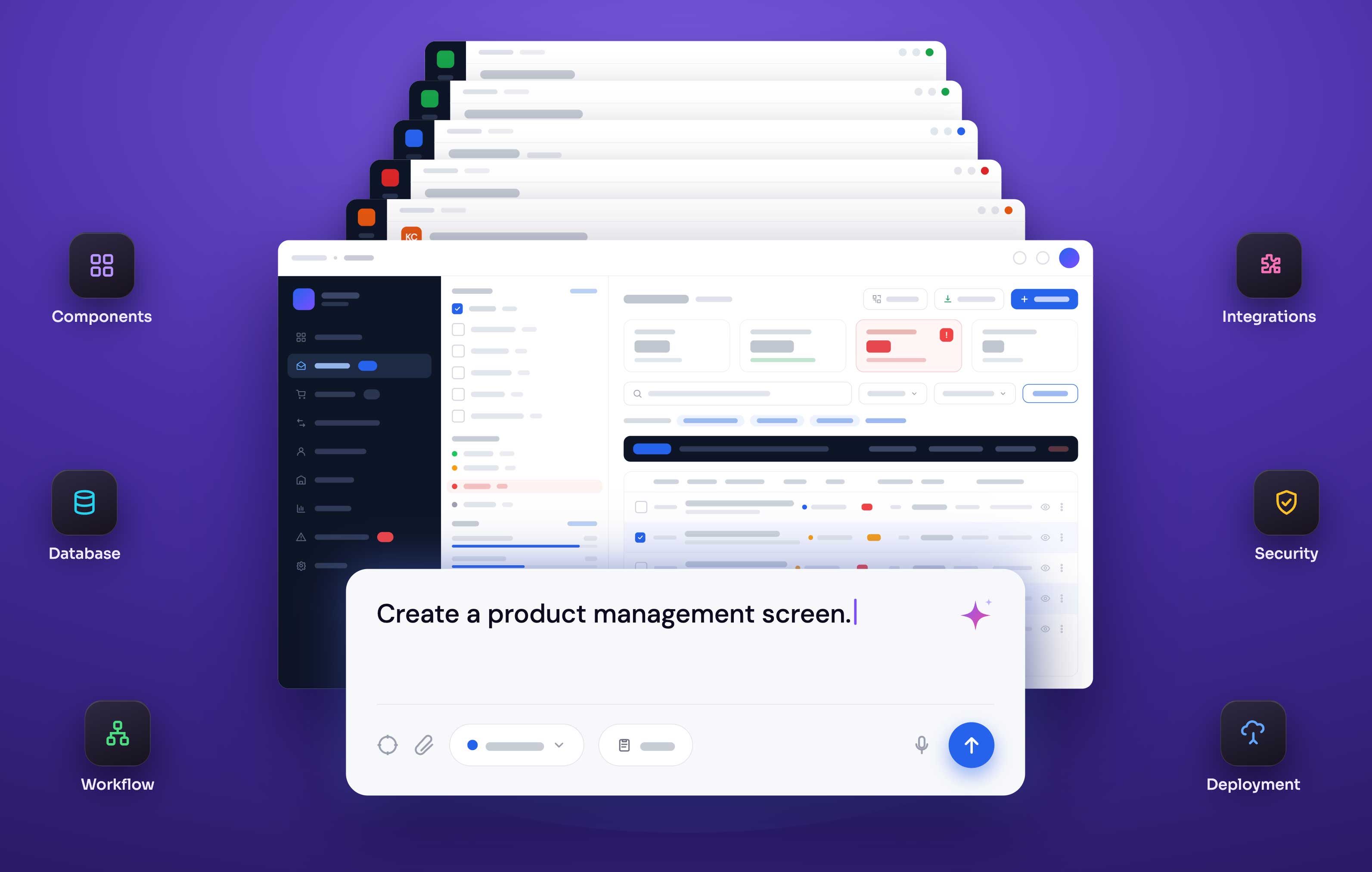
The use of low-code development tools is also an example of digital transformation in the software industry. With the help of low-code and no-code platforms, businesses can automate their tasks and bypass the arduous hand-coding processes. This not only saves their time but also provides the agility required for staying competitive.
A digital transformation strategy is a detailed road map that determines the process of integrating digital solutions in order to improve internal operations and deliver value to customers. Digital transformation strategies are divided into two categories: linear and exponential.
Digital transformation is a must for a business to adopt new technologies that will enhance its productivity and competitiveness in an increasingly digital business environment. As companies integrate digital solutions into their workflows, they will also improve their customer interactions and services via digital channels, having less difficulty in meeting the evolving expectations of a tech-savvy consumer base.
Digital transformation is also key for operational efficiency and agility, which will keep businesses ahead of the curve in fast-paced industries. Prone to unpredictable changes, constant adaptation to state-of-the-art technologies is of crucial importance in the software industry.
Software developers now use various tools to streamline their work, and low-code platforms are only one of them. While low-code development simplifies and democratizes app development, it also allows for rapid creation with minimal coding. This both speeds up the development process and provides agility to the developer team, eliminating the hassle of hand-coding.
Digitalizing workflows is not only about making things quicker but also making them better and smarter. Here are some key aspects to consider when creating a digital transformation strategy.
A company should not rely fully on digital software but aim to support its talented team with them. Here, low-code development provides your team with room for creativity by easing the technical hassle of their workflow.
Having easy-to-get and up-to-date data is necessary for a successful digital transformation. Businesses should organize their data for easy company-wide use and update them regularly with clear rules and management.
As fast-paced digitalization requires businesses to go beyond linear digital transformation, companies need to adopt new technologies with strong adaptation abilities. Low-code and no-code development helps businesses with acquiring such agility by supporting them when needed.
Kuika’s low-code and no-code solutions can be game changers in your digital transformation strategy. Kuika’s low-code platform provides you with the tools to develop your software, so you don't need to be a coding guru to build powerful apps. It democratizes the development process by opening the door for more people to bring their ideas to life, without the heavy lifting traditional coding requires.
Or else, you can opt for Kuika’s Turnkey Project, and get the experienced Kuika team to build your application in accordance with your wishes and requirements.
Schedule a demo.
Dive deeper into Kuika with expert-led videos, detailed manuals, tutorials, and a vibrant community behind you.